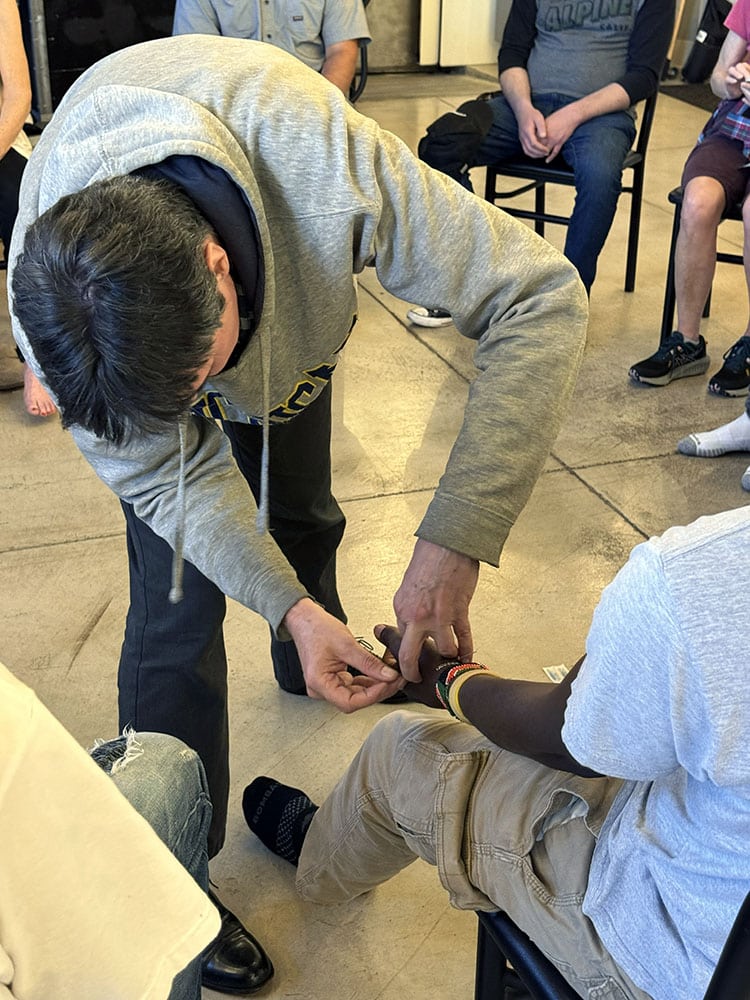
At the Recovery Café, we often talk about the many “pathways” to recovery. For some, it’s a support group; for others, it’s a warm meal or a song at Open Mic. But for many of our Members, recovery starts with five small needles and a few moments of quiet.
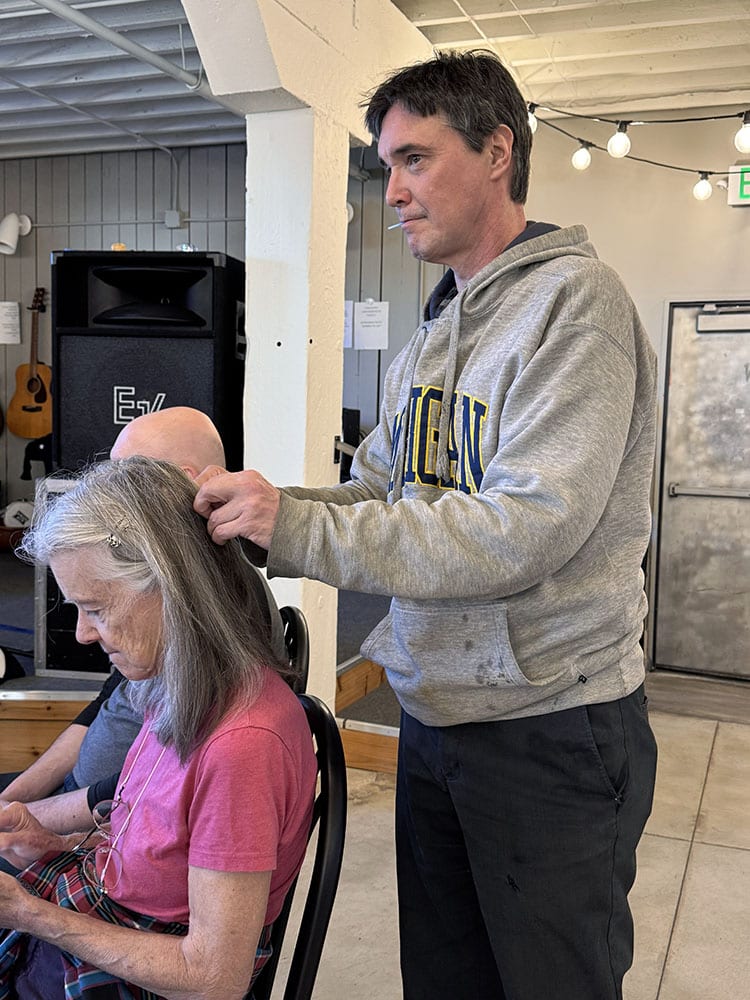
That’s thanks to Jim, a licensed acupuncturist and a cornerstone of our community for over eight years.
A Legacy of Service
Jim has been with the Café since our early days in the “house on Broadway.” What started as a monthly volunteer visit in 2017 grew into a bi-weekly, and now a weekly commitment every Thursday.
“I live just a block and a half away,” Jim says. “This is my neighborhood. The Recovery Café is my community, and I love being here.”
From the South Bronx to Everett
Jim’s journey to the Café is as interesting as the practice itself. While in acupuncture school, Jim was trained in the NADA (National Acupuncture Detoxification Association) protocol.
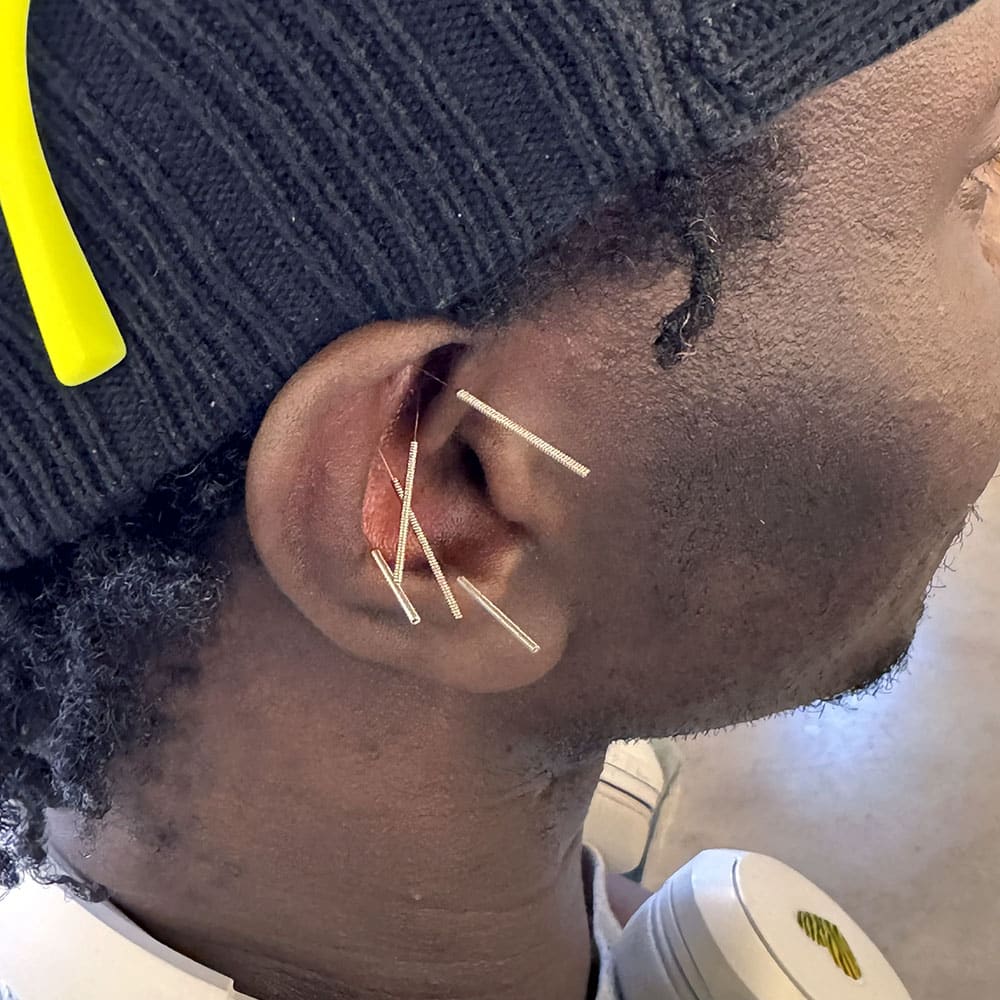
This specific “five-needle” ear protocol has a radical history. It was developed in the 1970s at the Lincoln Clinic in the South Bronx by members of the Black Panthers and the Young Lords (including Mutulu Shakur, Tupac Shakur’s stepfather). They were looking for community-led, non-pharmaceutical ways to treat heroin addiction.
Decades later, Jim is keeping that legacy of community-based healthcare alive right here in Everett.
More Than Just Addiction Recovery
“This is my neighborhood. The Recovery Café is my community, and I love being here.” – Jim
While Jim is a specialist in neurological disorders—treating everything from stroke recovery to MS in his private practice—he brings a wide range of relief to our Members. On any given Thursday, you’ll find him treating:
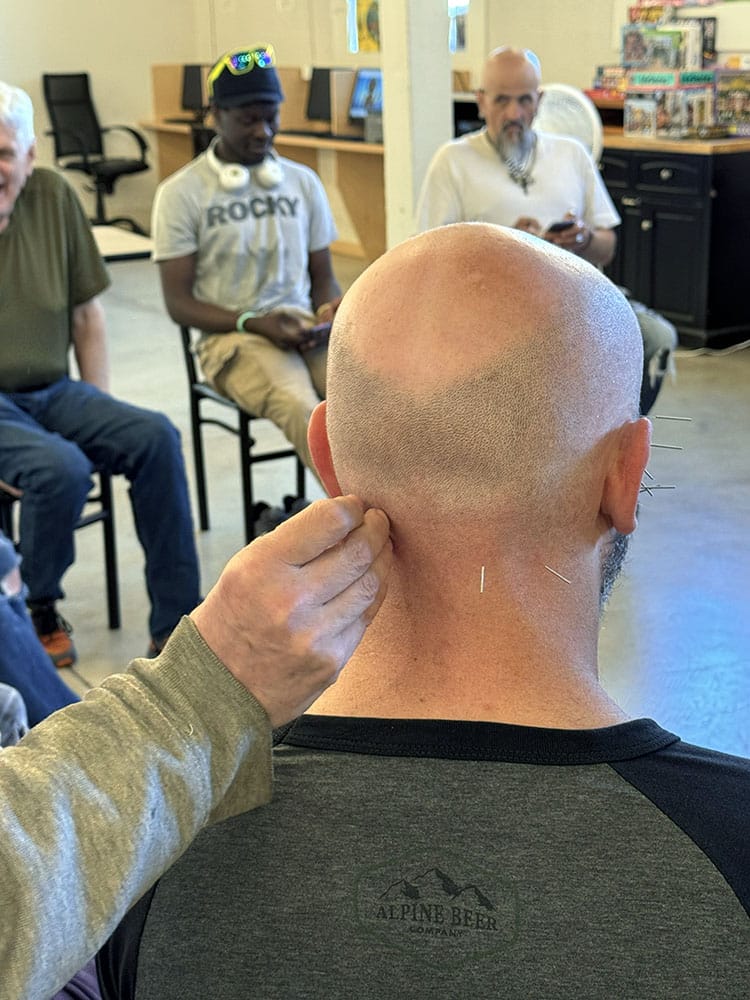
- Chronic Pain: Relieving the neck tension and back pain that often comes with the stress of recovery.
- Anxiety & Insomnia: Helping Members find a sense of calm in a chaotic world.
- Neurological Relief: Offering specialized care that Members might not otherwise be able to access.
Why It Matters
Acupuncture at the Café is about more than just physical relief; it’s about dignity. It’s about providing high-quality, professional care to people who are often overlooked by the traditional medical system.
Jim’s presence proves that “the Café” isn’t just a building—it’s a network of neighbors looking out for one another. Whether he’s treating a Member for knee pain or simply sharing a conversation, Jim’s weekly presence is a reminder that healing happens when we show up for each other.